At Rowntree Gate Dental, our utmost mission is to assist our patients in preserving and nurturing their natural teeth for an extended duration. Nonetheless, situations may arise where a tooth, unfortunately, sustains irreparable damage, making extraction an unavoidable course of action. Our approach to this procedure is reserved as a final option, and should such a circumstance arise, you can have complete confidence in our commitment to ensuring your utmost comfort throughout the process. Moreover, if the need arises, we are proficient in promptly replacing the extracted tooth, minimizing any period of time spent with an incomplete smile. Our unwavering dedication is to alleviate any anxiety associated with such situations, consistently prioritizing your ease.
Why You Might Need A Tooth Extraction
At Rowntree Gate Dental, we always prioritize conservative treatments, but sometimes the optimal solution involves the careful extraction of a problematic tooth. Our approach is centered around various situations, including:
Extensive decay that has affected more than two-thirds of a tooth’s structure.
Physical trauma that has compromised the enamel’s ability to support a restoration.
An advanced infection that has compromised the bone necessary for tooth stability.
A persistent baby tooth that is obstructing the proper eruption of its adult counterpart.
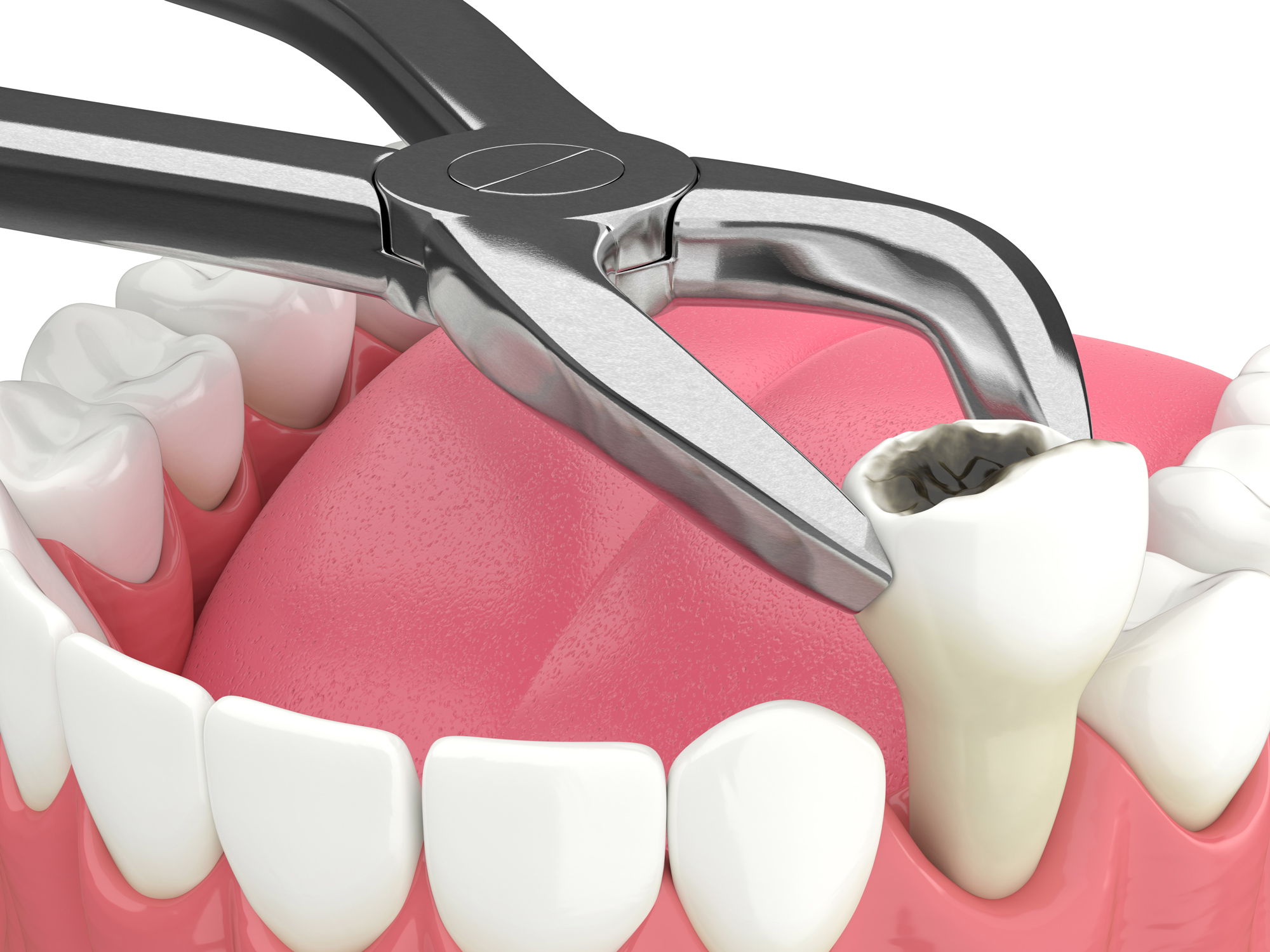
The advantage for our valued patients is that tooth extractions at Rowntree Gate Dental are remarkably gentle. Our process begins with numbing the area, followed by a delicate grasp of the tooth using specialized dental forceps. Subsequently, we delicately wiggle the tooth, and before you realize it, the tooth naturally releases. This seamless technique often leaves patients unaware of the extraction process.
Although mild oral discomfort may be experienced in the initial days following the extraction, patients typically recover their normal state within a week, resuming their regular diet and daily activities without interruption.
A tooth extraction may be recommended when a tooth is severely decayed, badly broken, infected beyond repair, affected by advanced gum disease, or preventing other teeth from erupting properly. Your dentist will always explore treatments like fillings or root canals before recommending extraction.
No. The area is numbed with local anesthesia, so you should only feel pressure during the procedure—not pain. Mild soreness afterward is normal and can usually be managed with the aftercare instructions and any recommended medication.
Most patients start feeling much better within a few days, while complete healing of the extraction site usually takes one to two weeks. Recovery depends on the type of extraction and how closely you follow your dentist’s aftercare instructions.
Stick to soft foods such as yogurt, mashed potatoes, soup, smoothies (without a straw), applesauce, scrambled eggs, and oatmeal for the first few days. Avoid crunchy, spicy, or hard foods until the area has healed.
For at least 24 hours, avoid smoking, drinking through a straw, vigorous rinsing, and strenuous exercise. These activities can dislodge the blood clot and lead to a painful condition called dry socket.
A thorough dental examination and X-rays help determine whether your tooth can be restored. Whenever possible, dentists aim to preserve natural teeth using treatments such as fillings, crowns, or root canal therapy before considering extraction.